Critical review of AI output
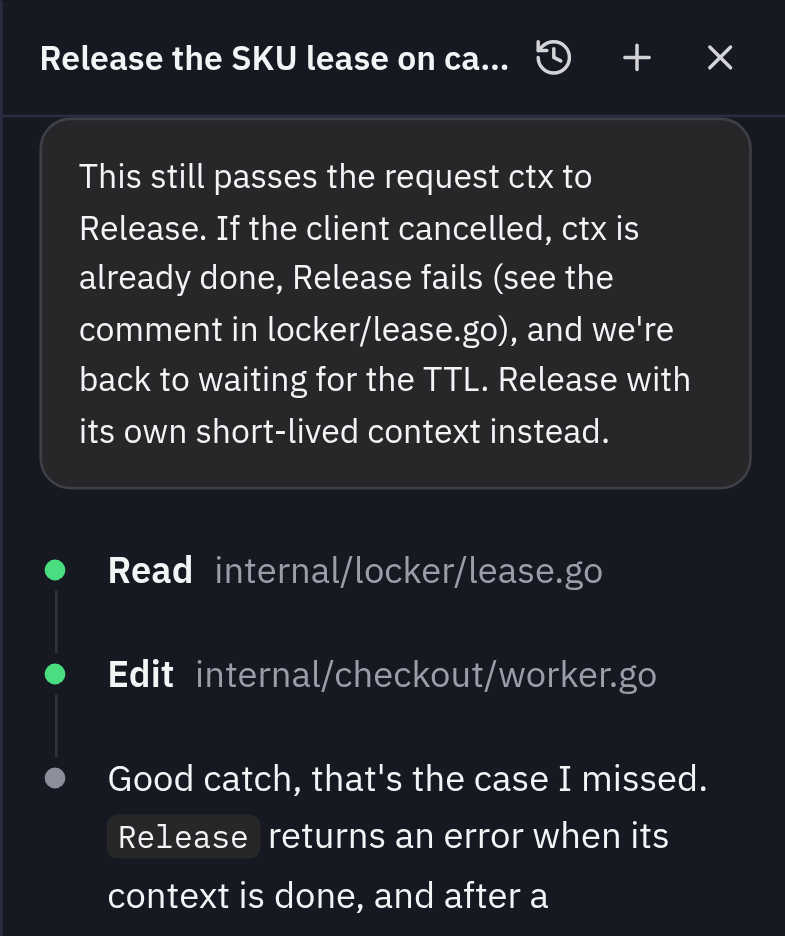
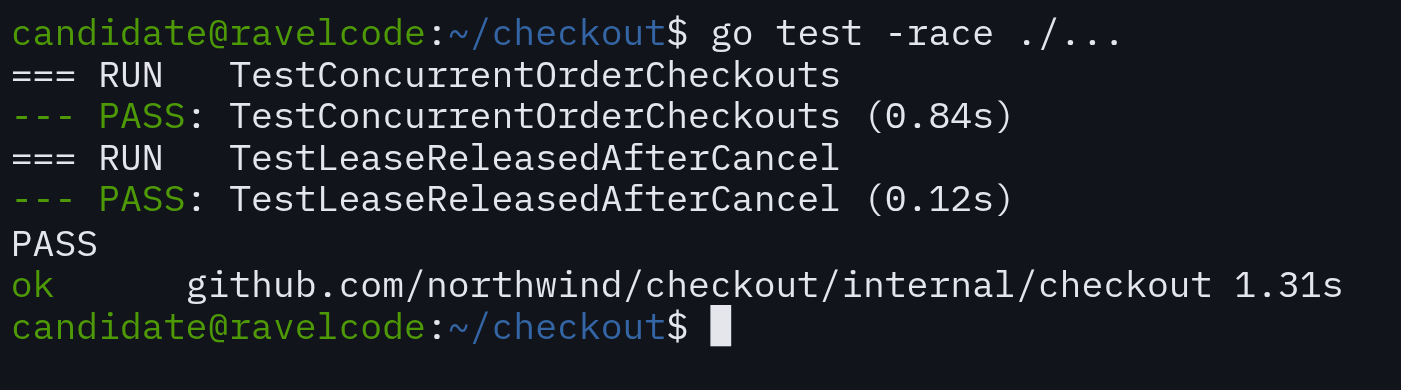
ExceptionalThe candidate caught a bug in the AI's fix1 and proved the fix with the race tests2 before committing.
Candidates build in a real repository with an AI assistant. You get a verdict where every claim is cited, like a footnote, to the moment it happened.
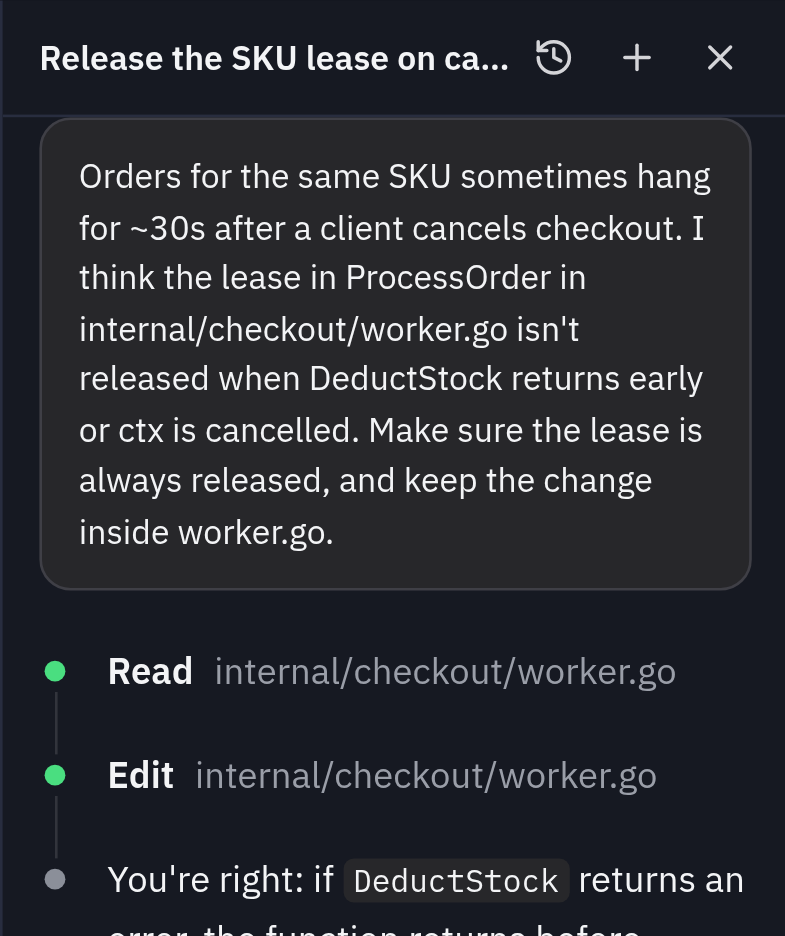
defer lease.Release(ctx) now releases the lease on every return path.The candidate caught a bug in the AI's fix1 and proved the fix with the race tests2 before committing.
They describe the problem and the approach they want.
Like any coding assistant, it gets most of it right. The miss would pass a quick review.
They explain the problem, have the AI correct it, and run the tests.
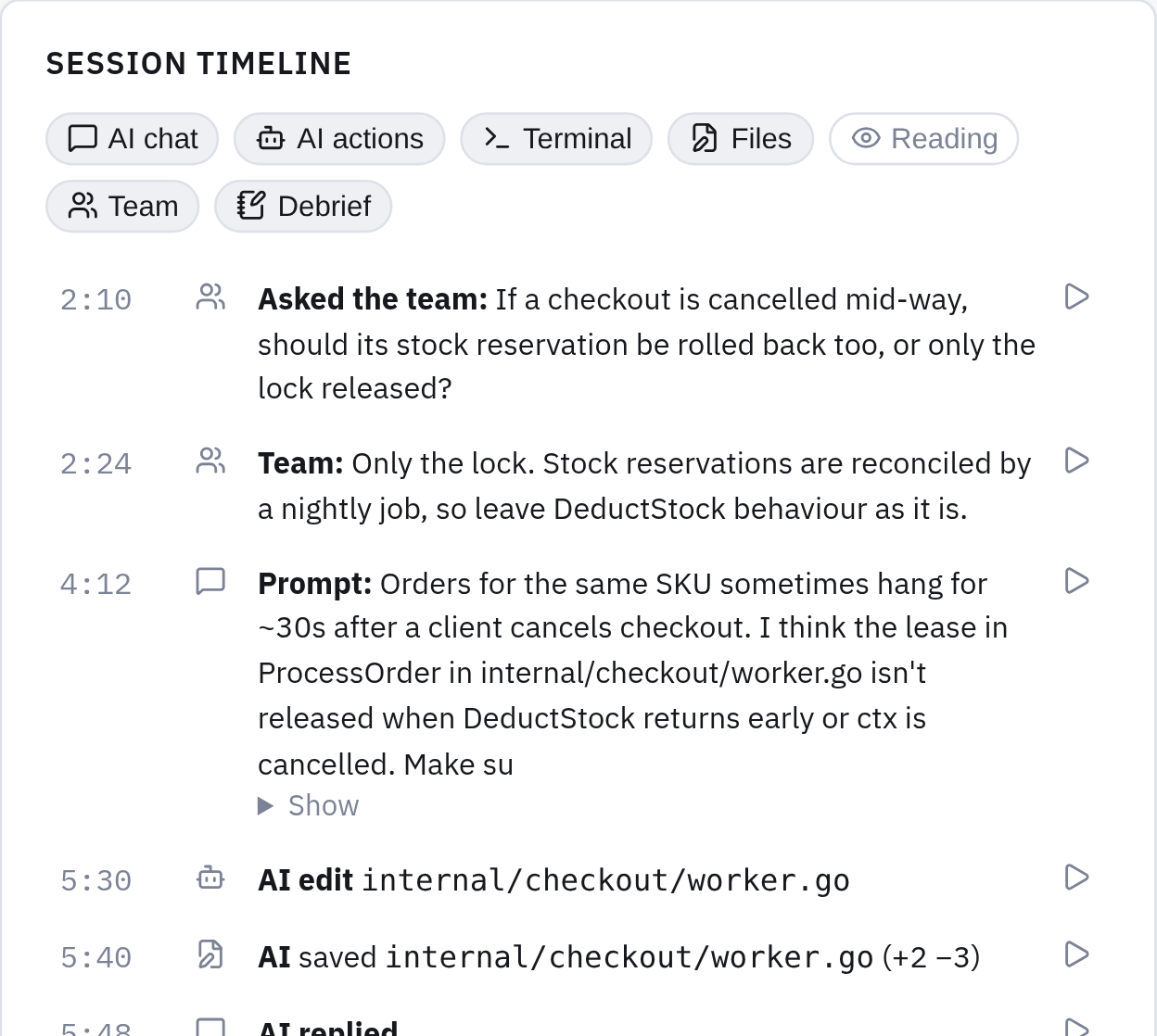
Prompt, change, test run and commit, each with a timestamp.
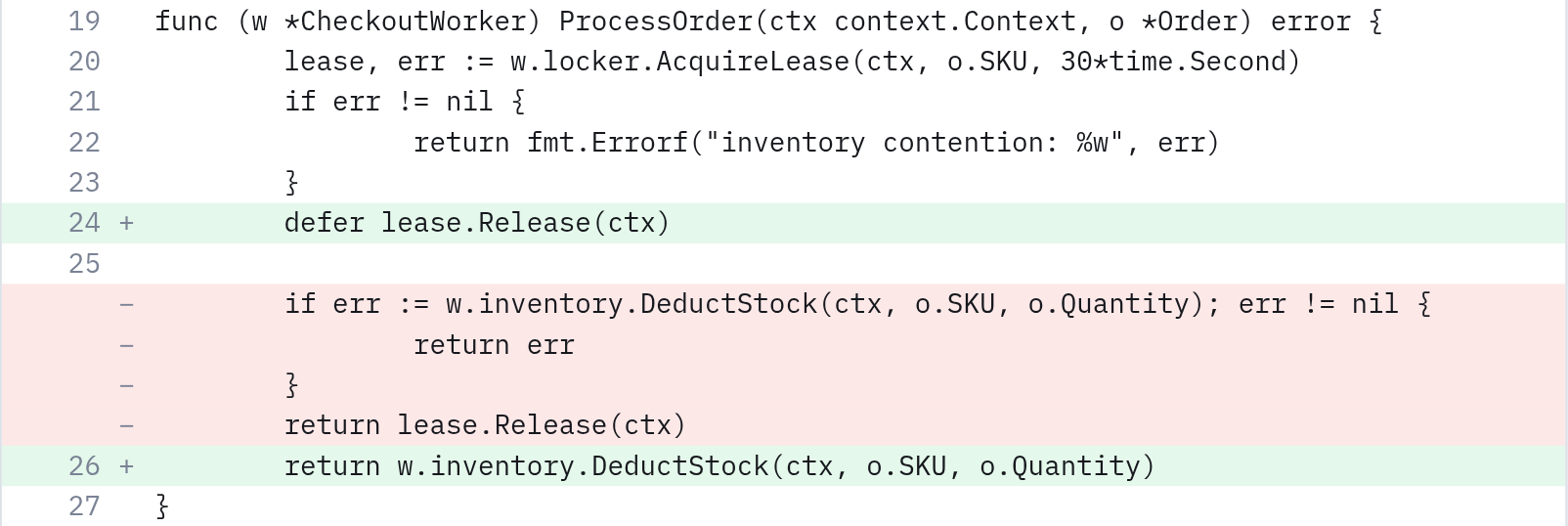
ctx is the request's context. Once the client cancels, Release fails and the lock stays held for the full 30s lease.
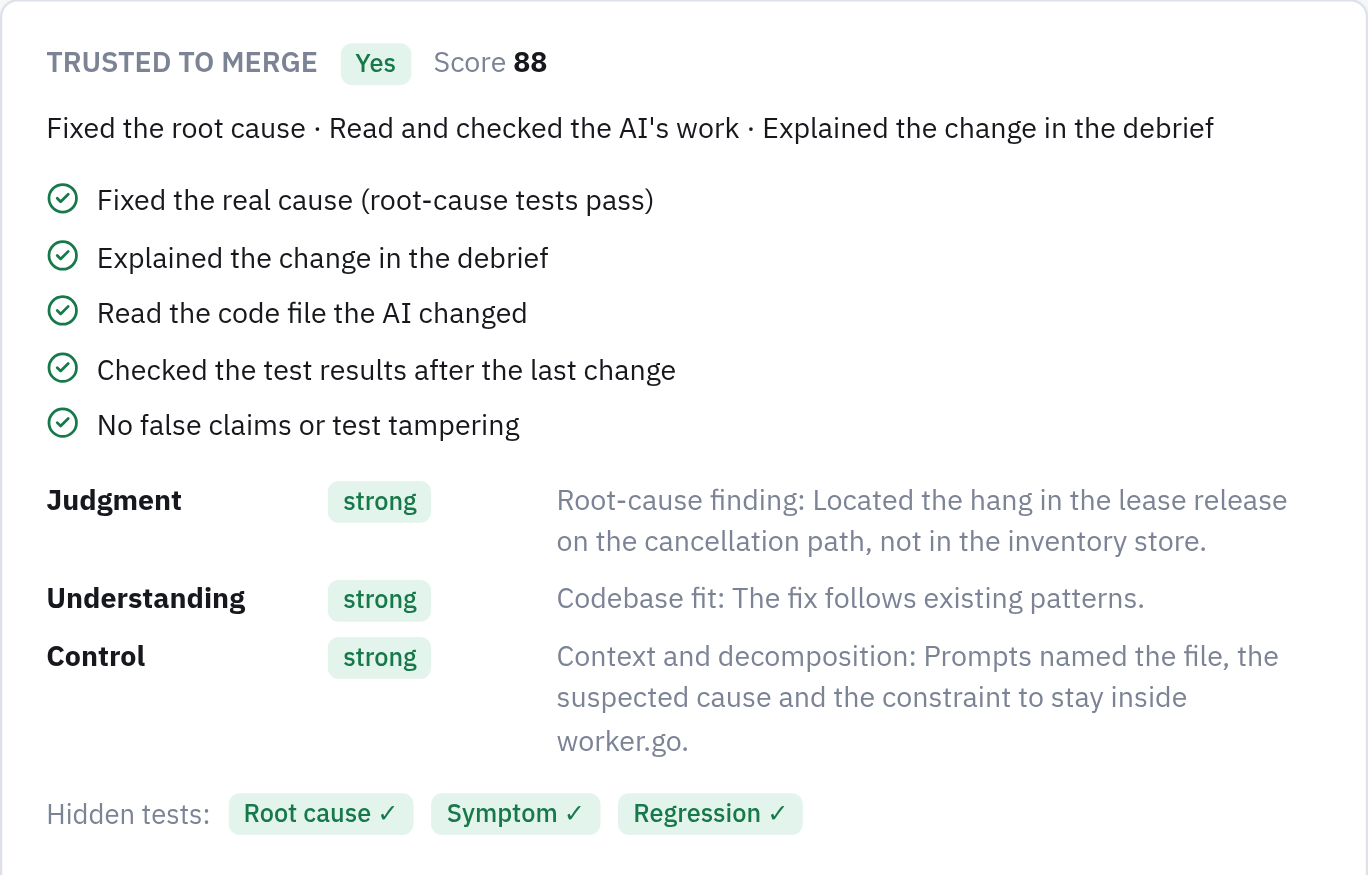
Every report ends in a plain verdict on whether you can trust the candidate's code: Yes, Needs a check, or No.
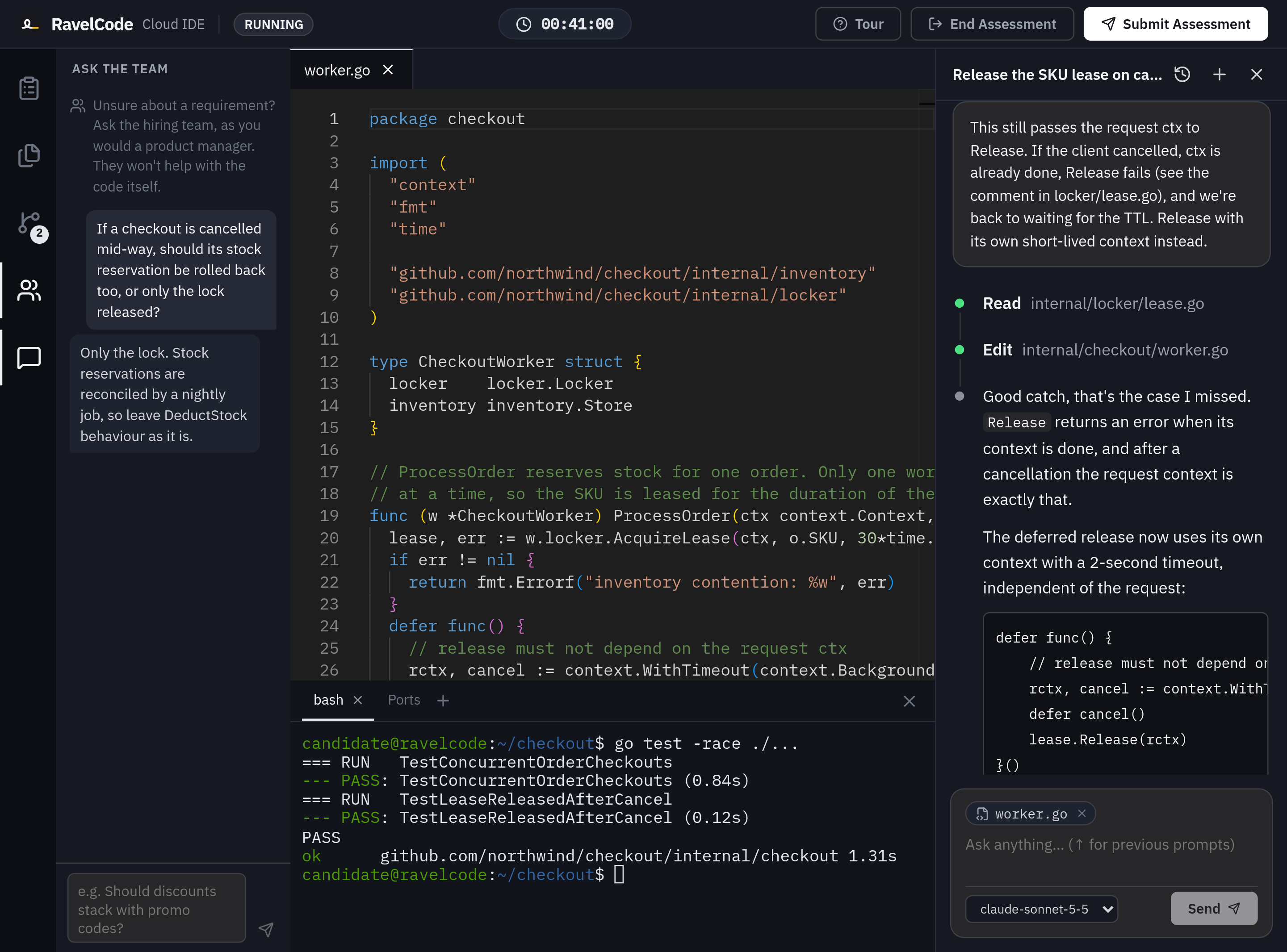
A realistic task with a time limit you set. Nothing about it feels like a quiz.
Ban AI and you test a workflow nobody uses. Allow it unobserved and you can't tell who understood the code.
| Live coding / LeetCode | Take-home project | RavelCode | |
|---|---|---|---|
| AI use | Banned | Allowed, but unseen | Built in, every prompt recorded |
| What you learn | Algorithm recall under pressure | The finished repo, not how it was built | How they steer AI, verify and debug |
| Bad AI output | Not tested | Invisible if it happens to work | Visible in the session and hidden tests |
| Engineer time | An interviewer per candidate | A reviewer reads every repo | Review a cited report |
Teams hiring engineers who work with an AI assistant every day. Engineering leads review a cited report instead of sitting in every first-round interview, and hiring managers can explain each decision with what the candidate actually did.
How well an engineer ships working code with an AI assistant: how they steer it, whether they check its output, and whether the result passes tests they never saw.
They don't need to. An AI assistant is built into the IDE, and its conversation is part of the record. Pastes into the editor are recorded too, and hidden tests check whether the code actually works.
Yes. Bring a slice of your own code instead of a template or a generated repository.
No. It's a normal coding assistant, and like any AI it is sometimes wrong. Separately, each repository is built like real work, with the kind of misleading details real codebases have. Careful engineers notice them.
Every finding must cite a real session event: a prompt, a file change, a test run or a commit. Findings whose citation doesn't match a real event are rejected.
Only what happens inside the assessment: AI conversation, code changes, commits and terminal commands. Nothing on their own machine is accessed.
Register, create a job, pick or generate an assessment, and invite candidates by email or link.
Register, pick an assessment and send candidates a link. Every finding in the report links back to the session.